
Aug
Uncategorized
How to Master Temperature Control in your Igneus Pizza Oven
When buying a pizza oven, one of the main considerations people have is whether to opt for a wood-fired or gas-fired oven. Here at Igneus, we’re big fans of wood-fired ovens – it’s all we do. They give a superior, wood-fired, smoky taste to your food that gas simply cannot match. However, the main drawback is it takes a little bit longer to master heat control than it does in a gas-fired, plug-and-play oven. But fear not, as we’re here to help. In this article, we’ll help you understand how to fine-tune temperature control in your Igneus oven and achieve restaurant-quality results with confidence, every time.
Start with the Right Fuel
Sounds obvious, doesn’t it? But starting with the right variety of wood makes all the difference when controlling the heat in your oven. We always recommend using seasoned hardwood with a moisture content below 20%. Something like kiln-dried Silver Birch is a fantastic option as it gives a long, consistent burn.
Avoid softwoods, which burn too quickly and leave behind excessive ash. Also, never use damp logs as they create smoke, not heat.
Lighting the Fire
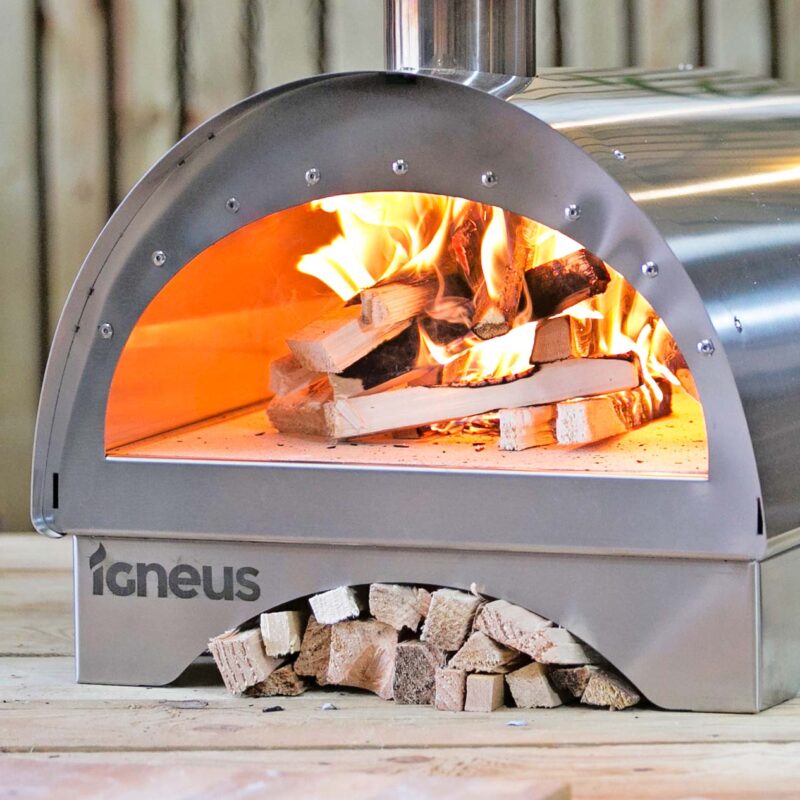
Achieving a strong flame that burns consistently all starts with how you initially build the fire. Start by arranging your kindling in a criss-cross or Jenga-style stack in the centre of your Igneus pizza oven. Next, place a natural firelighter underneath the stack and light it using a long-reach gas lighter or long match. Once the kindling catches, gradually add small hardwood logs. Avoid adding large pieces too soon, as this can kill the flame. A handy accessory to have in your armoury is a Kindling Cracker, as it allows you to use the same quality hardwood but in smaller sizes.
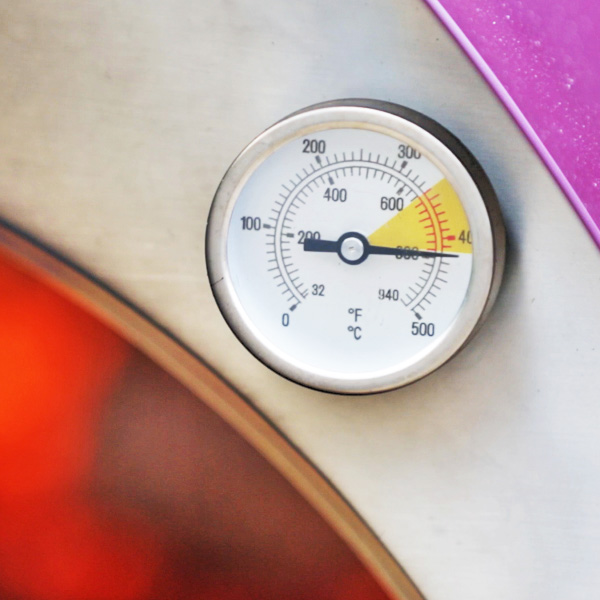
Let the fire build steadily before adding larger logs; this should be after around 5-10 minutes. Keep the fire going in the centre of the oven until the temperature gauge reads around 400-450°C, then push to the back of the oven using an Embers Rake.
Managing the Fire
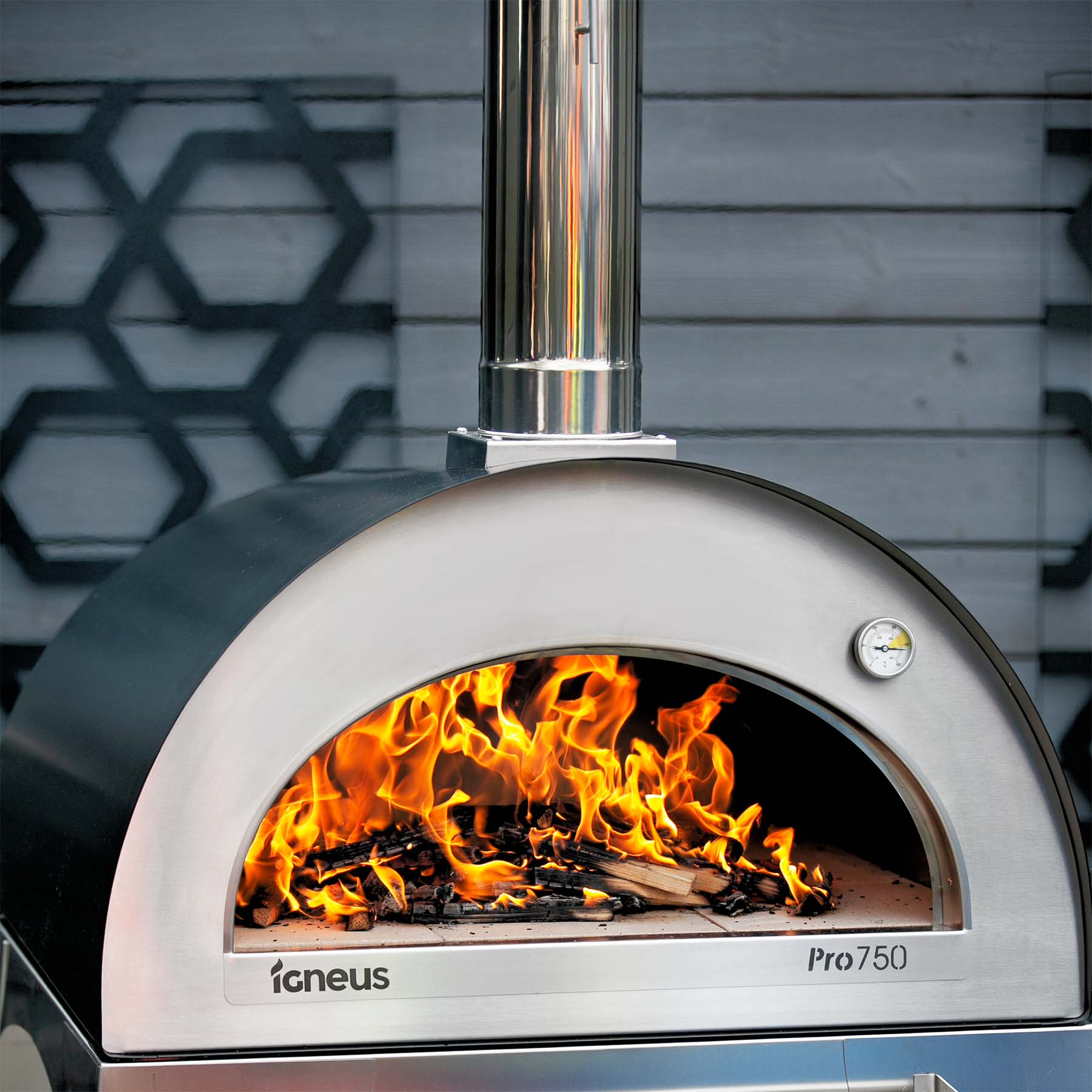
Once your fire is at the back of the oven and burning cleanly and steadily, i.e. little smoke and flames rolling over the arch of the oven’s roof, it’s time to cook. Where a wood-fired oven differs considerably from a gas-fired oven is how much management is involved during the cooking process, especially if you’re cooking for a crowd and the oven will be live for a long time.
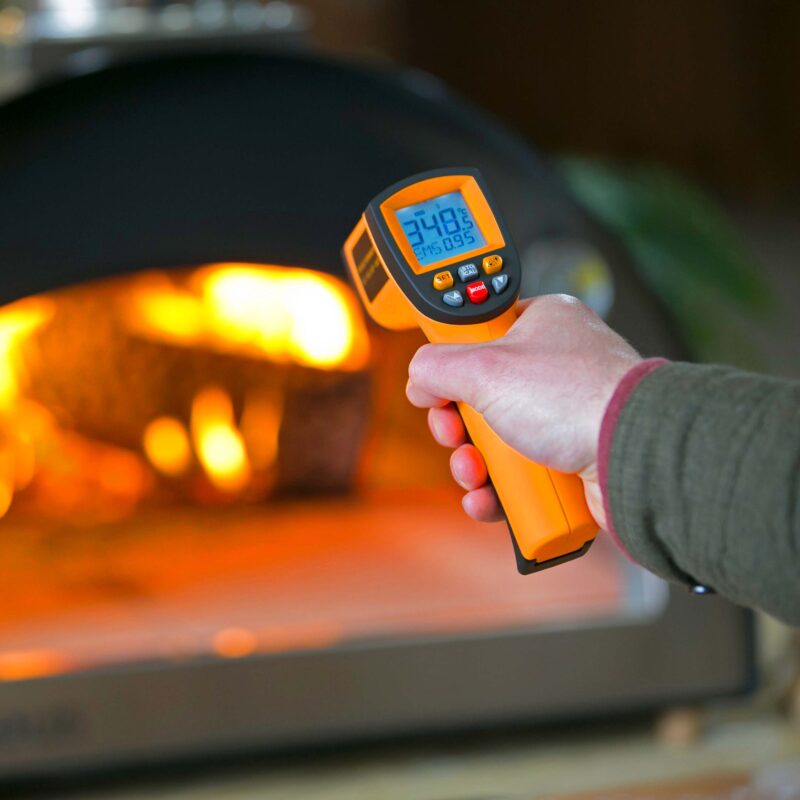
If you’re cooking pizza, look out for the rolling flame that licks over the top of the oven. This is a good sign that the heat is balanced and steady. Igneus ovens (except Minimo) come with a handy built-in thermometer, which makes assessing the ambient temperature of the oven super easy. It is, however, important to keep an eye on the temperature of the oven floor or firebricks too. Using an Infrared Thermometer helps immensely with this task! For pizza, aim for around 350°C.
If you notice the temperature of the oven drop, or the flames start to die down, it’s time to add another log to the fire. Don’t worry if your oven temperature gets too high in the few minutes after adding the log; this is normal. Just avoid launching any pizzas until the flame returns to normal and the temperature returns to normal range.
Finer Temperature Control
One of the key ways to adjust the temperature inside the oven is with the oven door and chimney damper. Both these elements control airflow. The more airflow gets to the fire, the hotter it will burn. So, if you want to increase the temperature, open the chimney damper. If you want to reduce the ferocity of the flame, close the chimney damper and put the oven door in position.
The door is especially useful when cooking foods at a lower temperature, as it allows the heat of the oven to be mostly retained, but without a roaring flame.
Different Foods at Different Temperatures
As we always say here at Igneus, pizza ovens are for much more than pizza! So, what about if you’re cooking different foods in your Igneus oven? Once you’ve mastered the art of heat control, you can move on to a whole range of different dishes simply by adjusting fuel input or using residual heat.
The insulating properties of an Igneus oven mean they stay hot for hours after the flames subside, making them perfect for cooking foods that require a slightly lower temperature. We’ve created a rough guide below of the most popular types of food people like to cook.
- Pizza: 400-450°C for 60-90 seconds
- Roasting meats/veg/potatoes: 200-300°C
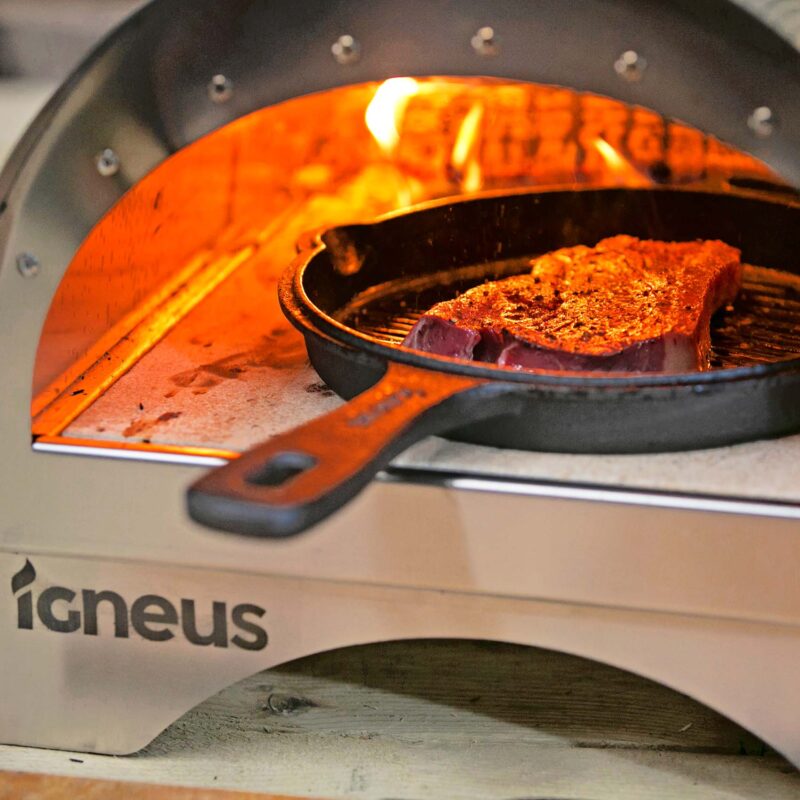
- Searing steaks: 250-300°C
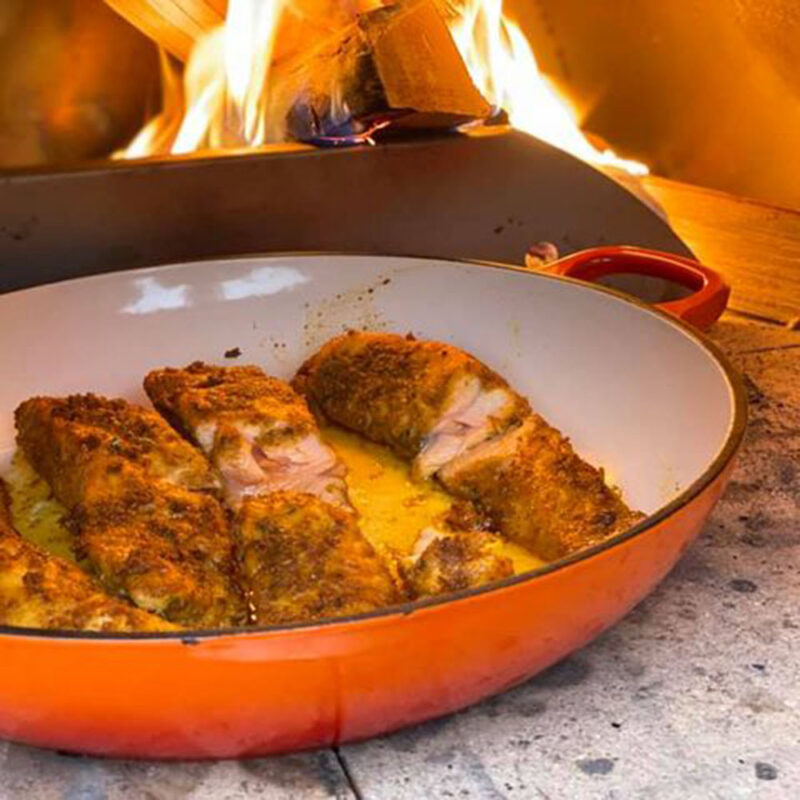
- Fish and delicate veg like asparagus: 200-220°C
- Baking bread or desserts: 120-200°C
As the oven cools down naturally after the main fire dies, you can continue cooking at lower temperatures. Just remember to rotate dishes during cooking to prevent uneven browning from the hot spots near the fire.
Common Mistakes
When first getting used to your Igneus Oven, there are a few mistakes that could catch you out when it comes to temperature control. All of these will be ironed out through practice, but here are the most common ones so you’re aware and can try to avoid them from the outset.
- Adding too much wood too fast. This creates flames without heating the oven floor/firebricks properly.
- Not letting the oven fully preheat before launching. Always look for that hot, clean burn before starting to cook.
- Letting the fire die out mid-session. Always keep an eye on the flame as well as the temperature. A rolling flame means a consistent temperature.
- Overloading with logs, which restricts airflow and causes excess smoke.
Keep your fire small but steady, and you’ll quickly learn how to make adjustments as you go.
Final Thoughts
Mastering heat control takes a bit of practice, but once you get the hang of it, your Igneus oven becomes incredibly versatile. Whether you’re cooking pizzas at full heat or slow roasting a Sunday lunch, learning how to manage your flame and airflow is key to consistent results.
As always, if you have any questions about using your oven or want some tailored advice on getting the most from your Igneus, our friendly team is here to help. Just give us a call on 01423 575885 or browse our full range of ovens and accessories here.