
Dec
Uncategorized
How to Read Your Pizza Oven Like a Pro
It might seem like a strange concept to put forward: “reading your pizza oven. But bear with us. Wood-fired cooking is as much about art as it is about science, and one of the secrets to great pizza is getting to know your oven. If you’re new to using a pizza oven, especially a wood fired pizza oven, getting used to cooking with temperatures of 450°c+ can be a steep learning curve. At these temperatures, everything happens fast, and that means learning to read the heat, the structure of the flame, the sound of the wood and other subtle changes inside the oven is vitally important to achieve the perfect cook. In this article, we’ll help you fast-track those learnings and enable you to grasp those cues in time for your next pizza party. Let’s dive in.
Understanding Heat Zones & Temperature
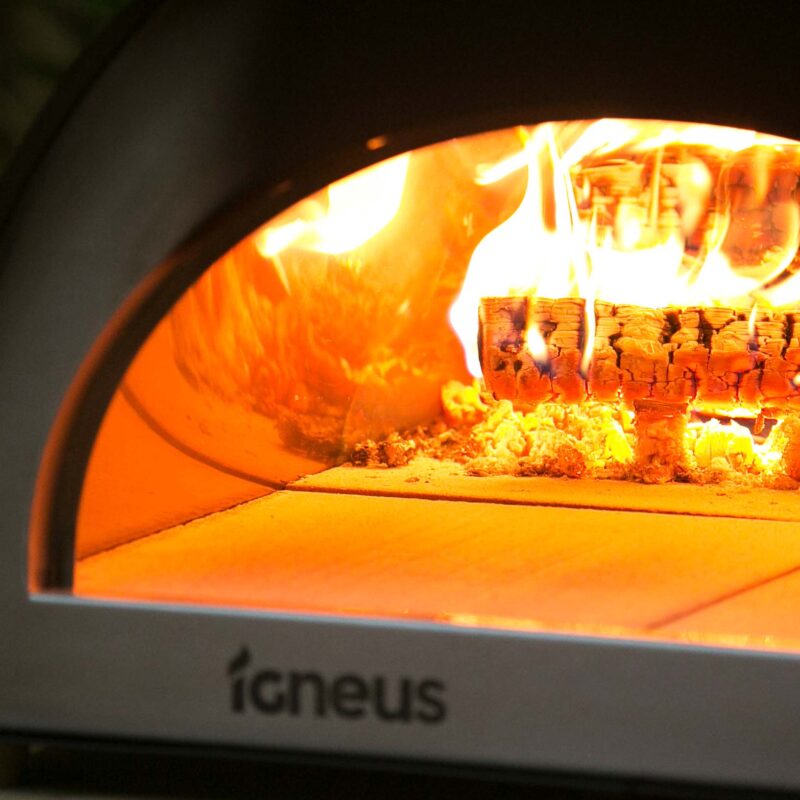
In any pizza oven, three main heat zones work together: the fire side, the dome (or roof) and the cooking floor. The fire obviously produces that intense heat that cooks pizza in just 60 seconds, as well as those signature blistered and leopard-spotted crusts. The dome helps radiate heat downward and allows the flames to arc over the top of the oven and almost lick the toppings of the pizza. The oven floor or stone is the unsung hero of the oven. It stores an incredible amount of heat and cooks the pizza from below.
Getting familiar with these zones and temperature ranges is so important. For classic Neapolitan-style pizza, you’re aiming for around 400 to 500°C ambient temperature, which allows the dough to rise rapidly. For slightly thicker bakes such as Detroit-style pizza, you’ll need to aim for a lower temperature range of 300 to 380°C. When the oven drops to 250 to 300°C, it becomes ideal for roasting vegetables, baking bread or cooking dishes that benefit from slower, gentler heat. This is where the stored heat in the oven floor comes into play.
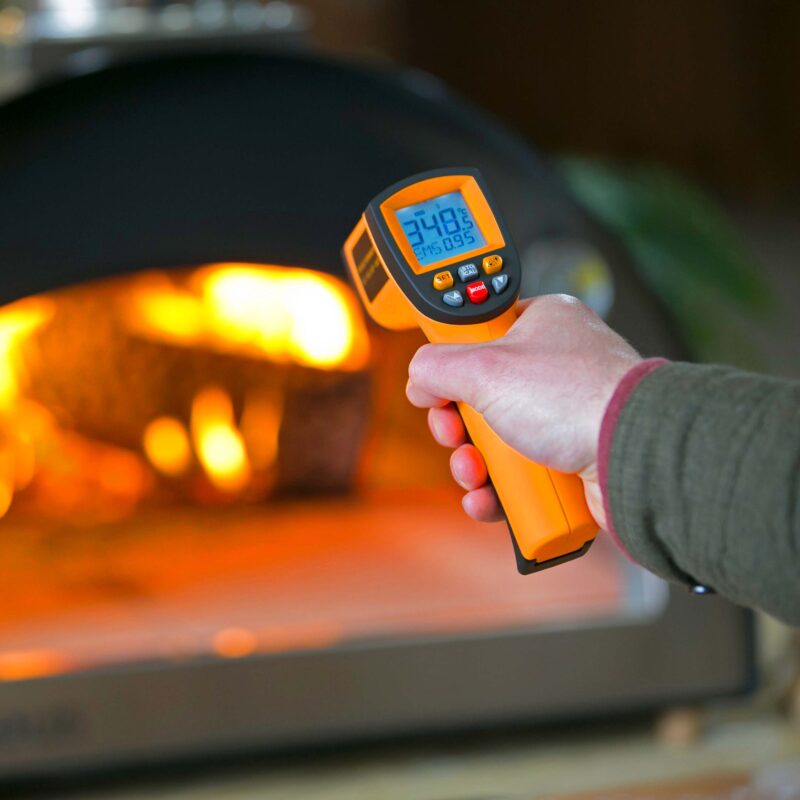
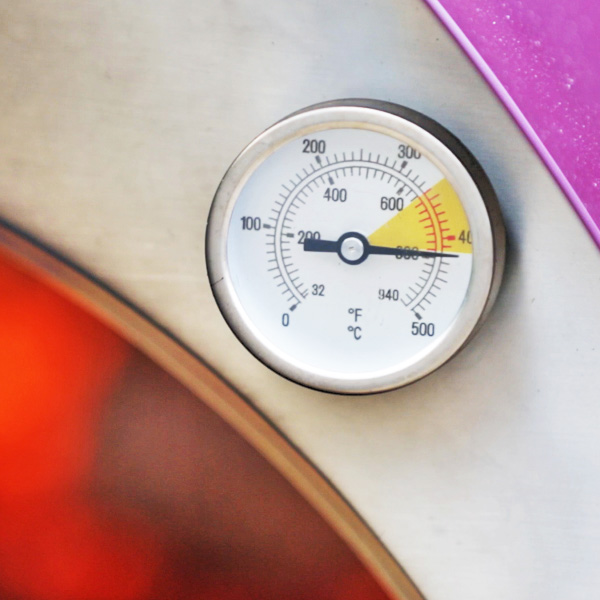
We always recommend investing in an infrared thermometer to help assess the heat within your oven, in particular for the stone temperature. All Igneus ovens have an in-built thermometer which assesses the internal temperature. Although these tools are important, reading the signals of heat can be just as important, especially as you become more experienced. As the wood burns and the temperature rises, you’re looking for a clean burn with no smoke. This signals that any moisture within the wood has burned off, and the wood is generating the heat needed to cook pizza.
Reading Flames, the Dome & the Floor
When the flames are clean, fierce and are being drawn over the top of the oven, it’s a strong indication that the oven is in perfect condition for high temperature, quick cooking. If the flames settle into glowing embers, the oven shifts into a more controlled state suitable for dishes that need time rather than intensity.
The dome itself can also give some strong cues. If there’s a high amount of dark soot across the dome, it’s a sign that the oven still needs further saturation before launching. Ideally, you’re looking for a white, soot-free dome that indicates optimal temperature.
When it comes to the floor of the oven, of course, the simplest way is to use an infrared thermometer as mentioned above. However, it’s just as effective to launch a ‘trial’ pizza. If the undercarriage stays pale, the floor hasn’t fully heated through. If the undercarriage burns too quickly, the floor is too hot and needs a few minutes to cool. Don’t worry about wasting that first pizza (you don’t even need to add toppings!). It’s a bit like the first pancake, it’s never as good anyway!
Using Movement & Positioning
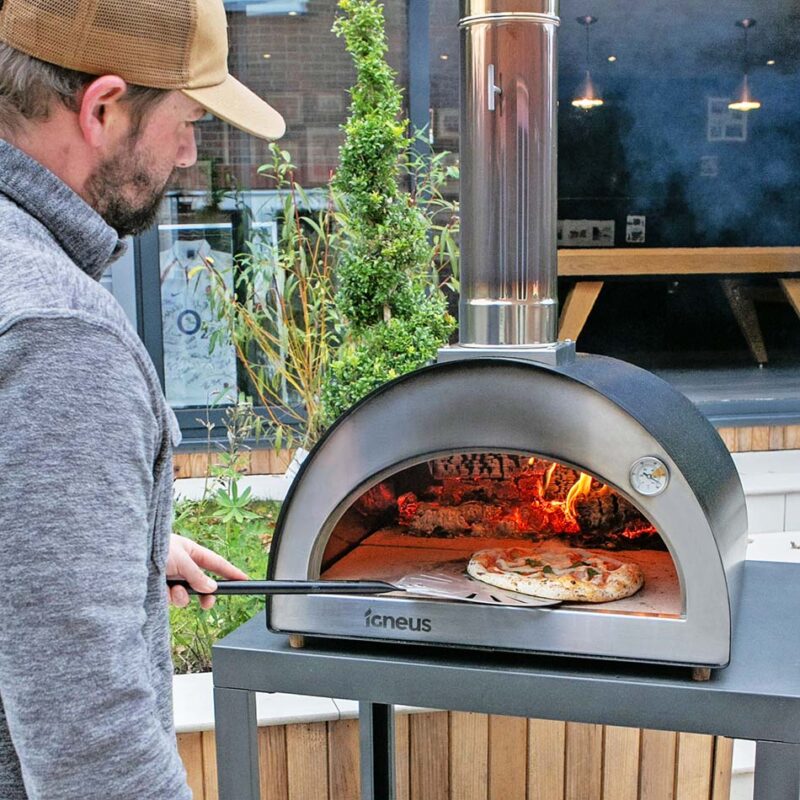
When cooking pizza, you have to be on it, watching as the dough rises and starts to blister. It can take as little as 60 seconds to bake a pizza, so walking away isn’t an option! Placement and movement of the pizza as it cooks is a key part of the cooking process. Always position the pizza centrally in the oven, not so close to the flames that it’s going to burn instantly, and not too close to the mouth of the oven where the temperature is naturally lower.
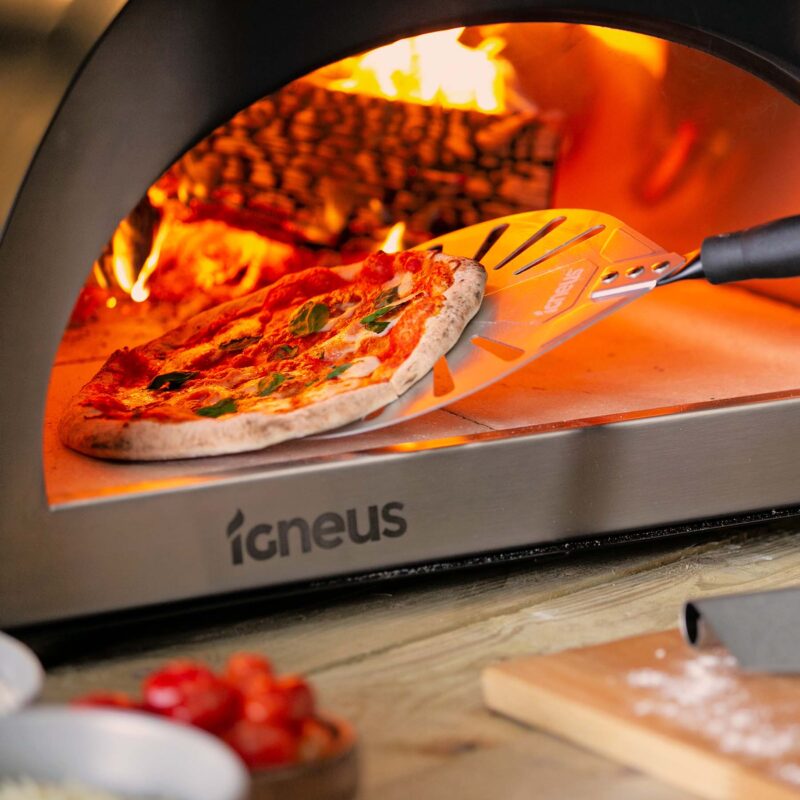
As the pizza bakes, rotate it every 10 to 15 seconds using a turning peel to ensure even colouring, as the side closest to the fire will always cook faster than the other in a wood-fired environment. Also use the peel to slightly lift the pizza to check the cook on the undercarriage. If it looks like it’s burning, move the pizza closer to the mouth of the oven.
If you feel the base is cooked and the cornicione is aerated but you’d still like a little more colour on your toppings, and more blistering on the cornicione, use your peel to lift the pizza towards the roof of the oven. This is one of the hottest ambient areas of the oven as heat naturally rises. Hold it there for a few seconds to until you’ve achieved the result you want.
Final Thoughts
Reading a pizza oven is a skill that develops over time. With practice, you’ll learn to understand visual cues, heat movement and cooking rhythms on autopilot. Igneus ovens are designed to make this intuitive, helping you cook restaurant-quality pizzas at home with confidence and consistency.
If you’d like to learn more about the range of Igneus Pizza Ovens or have any questions you need answering, our friendly team is here to help. Call us on 01423 575885 or explore our full range of ovens and pizza oven accessories here.