
Mar
Uncategorized
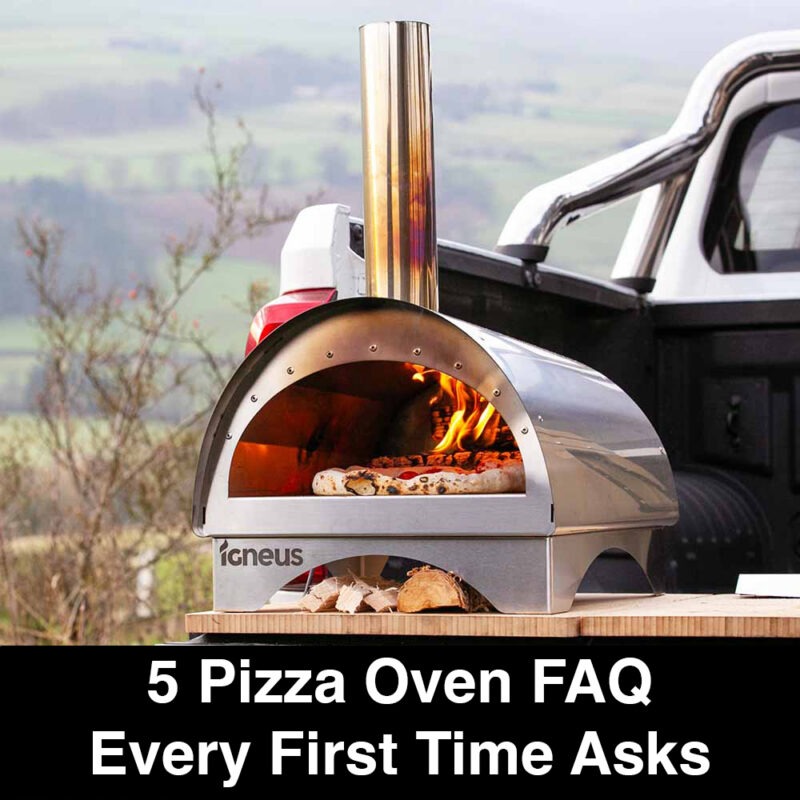
5 Pizza Oven FAQs Every First Timer Asks
If you’ve just bought, or are thinking about buying, your first pizza oven, you’re in the right place. You’ll likely have a ton of questions, which you might well be frantically scouring the internet for right now! Many first-timers quickly realise that cooking in a pizza oven, especially a wood-fired pizza oven, is a little different from using a conventional kitchen oven.
Managing high temperatures, handling dough and learning how heat behaves inside the oven can take a bit of practice, and it’s completely normal to have a few questions when you first start. The good news is, we’ve probably been asked those questions a thousand times, and they’re usually around the same kind of issues. So, in this article, we thought we’d lay them out and answer them all in one place.
FAQ 1: How Long Does a Pizza Oven Take to Heat Up?
This one depends on the size of your oven, but a rough rule of thumb is around 20 minutes. If you have a smaller, portable pizza oven such as the Igneus Minimo, it can be up to an operating temperature in as little as 10 minutes!
It’s important not to assume the oven is ready for the first pizza to be launched as soon as the fire is blazing. You have to let the flames settle and the oven fully saturate before cooking. That means both the ambient temperature and the stone floor are both up to temperature. When cooking pizza, aim for around 450°C ambient temp and 350°C stone temp for the best results.
FAQ 2: Should I Cook with Flames or Embers?
For pizza, a live flame is best as you want the lick of fire that rolls across the top of the oven. That’s what gives the intense heat that cooks the pizza from above. It also gives that signature leopard spotting, which is synonymous with classic Neapolitan pizza. That combination of rolling flame and hot stone is what allows the pizza to cook in as little as 60 seconds!
For other dishes such as roast vegetables, meat, fish, and casseroles, cooking using embers and residual heat is often more suitable as it allows for a slower cook and deep caramelised flavour without burning.
FAQ 3: Why Is My Pizza Base Undercooked, but the Toppings Are Done?
Managing the balance of air temperature and stone temperature is what causes many first-timers a bit of trouble when just getting started. If the ambient temperature of the oven is optimal but the stone is too cold, it can cause the toppings to char before the dough is cooked.
The best solution to this problem is to allow the oven to properly heat up and for the stone to absorb all that heat. Using an infrared thermometer can help you check when the stone has reached the ideal temperature for cooking.
FAQ 4: Why Does My Pizza Stick to the Peel?
We’ve all had a pizza refuse to slide off the peel at some stage of our pizza journey, but there are a couple of quick hacks to prevent it. The most common reason is not dusting the peel and working surface with fine semolina before stretching out. The semolina massively reduces friction between the dough and the peel, allowing it to slide off easily.
The next big reason for sticking is leaving the stretched pizza on the peel for too long before launching. This allows any moisture from the dough to be absorbed by the semolina, thus causing the dough to stick.
Using too many heavy, wet toppings is another common mistake. Stick to the rule of three toppings and don’t overload, no matter how hungry you are!
We always recommend using a perforated launching peel, which allows excess flour/semolina to drop through the perforations before launching. Give the peel a little shake to allow excess to fall away and to confirm the pizza isn’t stuck, prior to launching.
FAQ 5: Why Does One Side of My Pizza Cook Faster Than the Other?
No matter which size pizza oven you have, one side of your pizza will always cook faster than the other. That’s because it’s naturally hotter nearer the flames of the fire. That’s why it’s super important to use a turning peel to allow you to easily rotate the pizza as it cooks.
If your pizza oven is at the optimum temperature, the pizza will be cooked in as little as 60-90 seconds, so turning every 15-20 seconds helps ensure that all sides cook evenly and develop an even crust.
You can also get clever with your peel. If you notice the pizza charring on top too much, even after turning, you can use the turning peel to shield the pizza from the flames for a few moments. This allows the bottom of the pizza to cook through properly, without the top burning.
Final Thoughts
Cooking with a pizza oven can feel a little daunting at first, but once you understand how heat, dough and technique work together, everything quickly starts to fall into place. A few practice runs are all it takes to build confidence and start producing consistently great pizzas.
If you’d like to learn more about the range of Igneus pizza ovens, or have any questions you need answering, our friendly team is always happy to help. Call us on 01423 575885 or explore our full range of Igneus pizza ovens and pizza oven accessories here.