Jan
Tips & tricks!, Uncategorized
5 Reasons Why Pizza Burns (and How to Prevent It)
We’ve all burnt a pizza at some stage. It’s easily done. It’s one of the most common frustrations for anyone new to wood-fired cooking, and there isn’t just one reason it can happen. Whether it’s a scorched base, overly blistered crust, or toppings that catch before the dough is cooked through, it can be tricky to navigate nailing the perfect pizza. In this blog, we’re going to give you the most common reasons why pizzas burn, and how to stop it from happening next time you fire up your Igneus Wood Fired Oven.
1. The Oven Floor is Too Hot
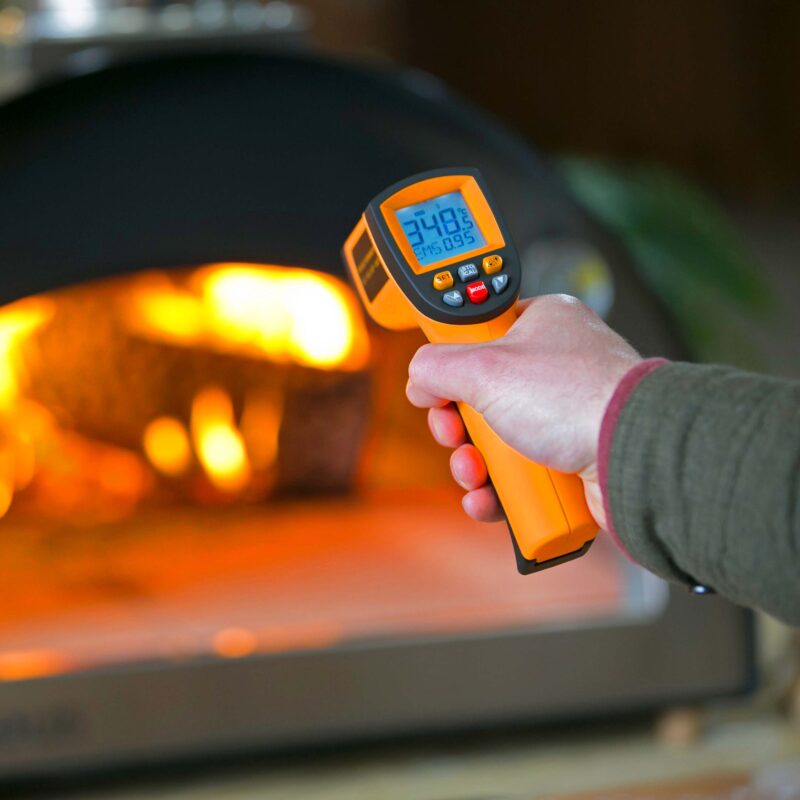
Let’s start with one that’s not always so obvious. Burning the undercarriage of your pizza is deceptively easy to do, mostly owing to the fact that it’s hard to know what temperature the floor is running at without an infrared thermometer. The floor of the oven always runs at a different temperature to the ambient air temperature (which is what’s displayed on the built in thermometer on your Igneus Oven).
The temperature you want to aim for on the stone is around 350°C. This gives a perfect temperature to cook the pizza from underneath quickly, but not so hot that it’ll burn before the top is cooked. After you’ve heated the oven and moved the wood to the back of the oven, it’s important to allow the floor temperature to settle before cooking.
2. Incorrect Pizza Positioning
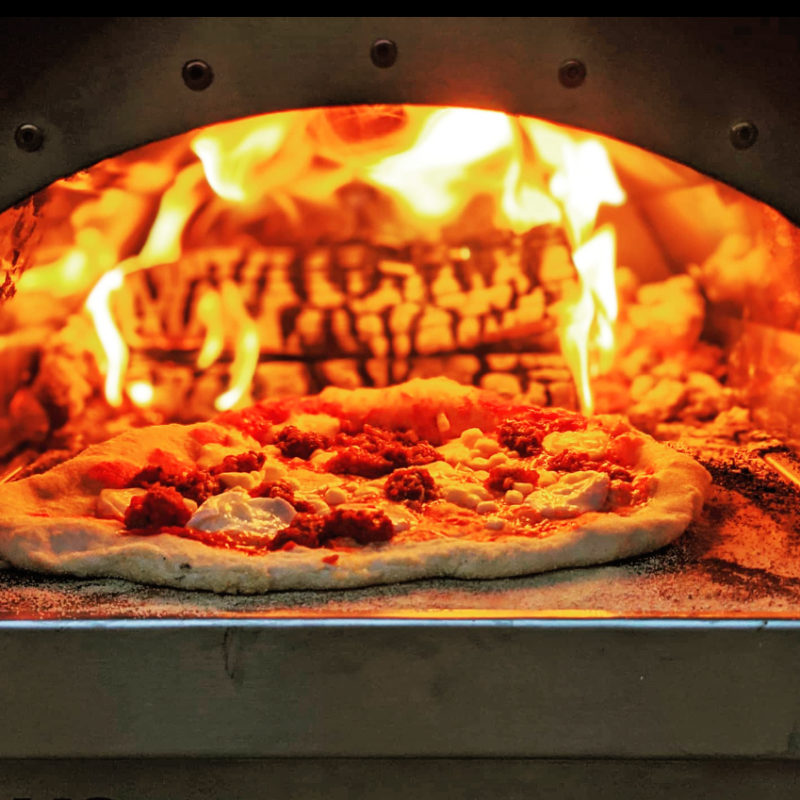
This one is a common mistake, but thankfully, it’s super easy to fix. It’s all about how you launch the pizza and where you position it on the stone. A common cause of the crust that’s nearest the edge of the pizza burning is that it’s too close to the flames. You want to aim to position the pizza in the centre of the stone, far enough from the fire so it doesn’t burn, but not too close to the mouth of the oven where the temperature is lower.
3. Not Turning the Pizza Often Enough
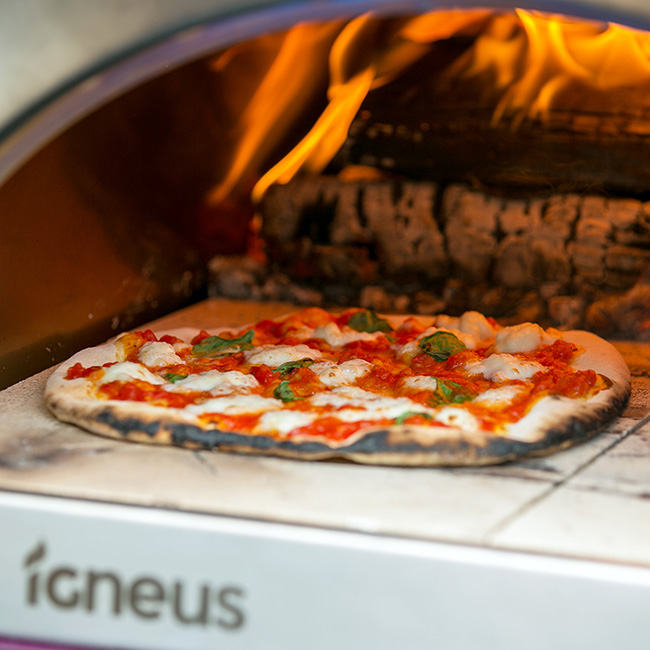
Cooking pizza in a wood-fired oven is hands-on and fast! You can’t launch it and then turn your back on it to grab a beer. It can be cooked in as little as 60 seconds, and because of the nature of the oven’s design, the pizza needs to be rotated so it cooks evenly. Just five seconds can be the difference between perfect leopard spotting and acrid burnt dough.
It’s good practice to turn the pizza little and often, around every 15-20 seconds. Small, regular rotations keep the heat balanced across the pizza and prevent any single area of the dough from taking the oven’s full heat for too long a period.
4. Ingredients that Burn Too Easily
Dough ingredients that are often listed in recipes can work really well in a domestic oven, butcause your crusts to char too quickly in the high, intense heat of a wood-fired pizza oven. Ingredients like sugar, honey or olive oil caramelise quickly at high temperatures, increasing the risk of burning. We’re not saying you can’t use them at all, but be mindful and use a little bit of trial and error with your recipes.
In our experience, simple dough recipes that call for minimal ingredients often work best when using a live flame. Traditional Neapolitan dough recipes are deliberately minimal for a reason!
5. Not Controlling the Heat
It’s easy to assume that hotter is always better when it comes to pizza. However, this isn’t the case. When you first add a fresh log to the fire, the internal temperature of the oven shoots up. Many people launch the pizza at this stage, which more often than not results in the top of the pizza scorching before the dough has cooked through fully, no matter how many times you turn it. Cooking when the temperature is over 500°C is unforgiving and massively increases the chance of burning the pizza.
It’s far better to preheat the oven and then let it settle back down to the desired temperature range. Usually, this is anywhere from 400°C to 450°C ambient temperature and 350°C on the stone. A steady, balanced heat gives you more time to turn the pizza and achieve an even bake without scorching.
Final Thoughts
Although burning pizza is all part of the learning process, and dare we say is, all part of the fun, it’s far better and a lot less frustrating to implement these simple bits of advice and really nail that pizza perfection. Mastering these fundamentals will help you get the best results from your Igneus Oven time after time.
If you’d like to learn more about the range of Igneus Pizza Ovens or have any questions you need answering, our friendly team is here to help. Call us on 01423 575885 or explore our full range of ovens and pizza oven accessories here.